

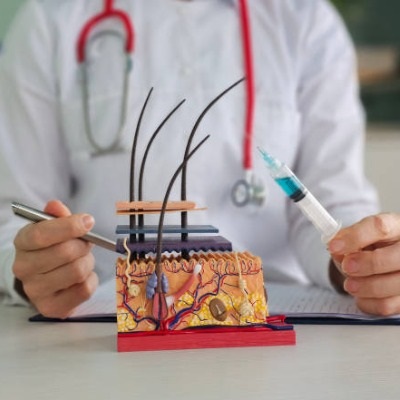
Loss of hair is no longer considered a permanent condition. Advances in medical science have transformed hair restoration into a reliable, long-term solution for people experiencing thinning or baldness. Knowing the science behind permanent hair restoration will help in understanding why this approach achieves natural effects and permanence.
Permanent hair-restoration is aimed at transferring healthy hair follicles to the area of scalp damage by loss. These follicles do not lose their genetic ability, and thus, they can further grow through transplantation. This is a biological rule that is the basis of the modern science of hair transplant.
How Hair Loss Happens at the Cellular Level?
The loss of hair is not uncommonly linked with the genetic predisposition to dihydrotestosterone (DHT). DHT gradually decreases the size of hair follicles, reduces the growth period, and ultimately halts hair growth. The front, the crown, and the mid-scalp are primarily affected by this process.
Conversely, back and side scalp hair is meant to be DHT resistant. These follicles have robust growth cycles, and their lifespan is determine by the number of high growth cycle. The follicle is suitable as a donor follicle in permanent hair restoration procedures.
The Principle of Dominatoric Donors
Donor dominance is one of the most significant scientific concepts of hair restoration. This rule implies that the hair follicles that are renewed in transplantation retain the properties of their initial place.
When DHT-resistant follicle are move to the thin area, they will keep grow as in the region where the donor was. That is why the outcome may be permanent in case of the proper execution of procedure with the help of highly developed method and correct positioning.
Advanced Techniques Used in Permanent Hair Restoration:
Permanent hair restoration is based on advanced surgical techniques, which are aimed at preserving the health of follicles and stimulating the developmental patterns.
Follicular Unit Extraction (FUE)
FUE is a process that uses the removal of single follicular units with the help of micro-punching instruments. These graft are then place in the area where hair has been lost, carefully with regard to the angle and depth applied. FUE reduces scarring and helps to heal more quickly, which is why it is a trendy method of coping with hair loss.
Follicular Unit Transplantation (FUT)
FUT involves harvesting follicles using a thin strip of the donor region. The strip is cut under magnification to maintain the integrity of the follicle. This procedure comes with a high amount of grafts during one session, as well as suitable in cases of a large amount of hair loss.
Both methods are based on medically approved, and they seek to preserve blood supply and follicle survival.
Function of Blood Supply and Healing:
The growth of transplanted hair permanently requires follicles to develop a new blood supply. After implantation, the scalp develops micro-capillaries that surround the grafts, supplying oxygen and nutrients needed to survive. This curing effect justifies the fact that hair can fall off first before going into the new growth cycle. Loss of the follicles does not occur; it is merely resetting. After a few months, it starts showing signs of regrowth, which helps in sustaining the hair regrowth.
Supporting Treatments That Enhance Hair Restoration Results :
Restoration of hair is usual use by surgery and supportive treatment to improve follicle health.
- Platelet-rich plasma (PRP) and exosomes involve the usage of growth factors contained in the blood of the patient to improve healing and transplanted follicles.
- Low-level laser therapy enhances the circulation and the activity of cells. These supplements promote a high level of hair restoration and enhance the overall health of the scalp.
Who is a Ideal For Permanent Hair Restoration?
Not all individual who have lost their hair can be immediate fit to get a permanent solution. Improved applicants tend to possess: Mature donor hair density. Diffuse shedding as opposed to pattern hair loss. An in-depth analysis enables one to assess the availability of grafts, hair type, and anticipated coverage. Adequate planning will give long-lasting and attractive outcomes.
Durability of Hair Transplants
As long as the hair follicles have been transplant, they keep on grow year after year. Such hair are natural and can be cut, style, and treat the same way as natural hair. Although native hair that has been surround can keep thinning with time, the transplant follicle are not affect by DHT. This is why hair restoration is said to be a lasting mean of hair loss, particularly when maintenance measure are use.
The Future of the Science of Hair Restoration:
Research continues to explore stem cell therapy, hair cloning, and gene therapy. These are still in development, but already, there are surgical methods available in the market that can provide predictable and long-term results. Biological knowledge, fine instruments, and the mastery of the work are the factors that determine whether hair restoration is successful or not in the modern world.
Book a Consultation With Royal Hair Transplant!
When you think about a long-term solution to the problem of hair loss, it is better to visit Royal hair transplant clinic in Islamabad specialist and find out which method is the most appropriate. Knowing the science of permanent hair restoration enables you to make informed choices and take positive steps towards natural and permanent hair growth.
Leave Your Comment